Customary titles in the Cook Islands carry histories of ancestry, kinship, responsibility and belonging. AI could help families organise dispersed records and preserve oral testimony to assist inquiry. The proceedings concerning the Makea Nui Ariki title show why this matters.
The Makea Nui Ariki case
The Makea Nui Ariki title of Te Au O Tonga, Rarotonga, has been disputed for centuries. The current dispute followed the death of Makea Teremoana Ariki in 1994 (Forsyth, University of the South Pacific). On 31 May 2025, Susan Love de Miguel was apparently invested as Makea Nui Takau Susan Ariki (Cook Islands News), but the litigation has continued with evidence that the title dispute goes back to the killing of Putua Ariki, which Ross Holmes dates to between about 1790 and 1810 (Cook Islands Customary Law, History and Society and Cook Islands Herald). The applications by Susan Love de Miguel, Frank Karati and Alistair Tinirau Macquarie concerning the Makea Nui Ariki tribal title were listed for hearing on 14 and 15 October 2026 (Ministry of Justice), with the hearing continuing on 23 October 2026, and local reporting describes claimants and objectors presenting competing genealogies and interpretations of customary succession (Cook Islands News).
The case shows the importance of establishing not simply who claims a title, but what the relevant history shows, what custom requires, and how both should be understood. Technology cannot resolve that question by selecting a winner. But it highlights a real challenge: how can communities make the historical evidence and customary principles relevant to customary title more accessible, organised and intelligible?
Reconstructing family history
AI can help organise genealogical information from family documents, historical registers, court records, letters, photographs and oral testimony. Families can use it to build a chronological account of known ancestors, compare versions of a genealogy, highlight gaps for investigation, transcribe historical documents, translate material where appropriate and summarise lengthy judgments. It could also support practical preparation: organising documents before a legal consultation and creating educational resources for schools and community organisations. Crucially, AI may help distinguish between established facts, contested claims and remaining uncertainty.
Understanding custom, not just recording history
Customary title may also involve principles of adoption, family recognition, community authority, installation and the relationship between a title and its land and people. Article 66A of the Constitution recognises custom and usage, subject to constitutional and statutory limits (BAILII). Framhein v Attorney General of the Cook Islands [2022] UKPC 4 was a fisheries appeal, but its discussion of Hunt v De Miguel [2016] CKCA 2 concerned the Makea Nui Ariki title (BAILII). Under article 66A(4), satisfactory evidence of the relevant Aronga Mana’s properly formulated opinion on local custom is treated as final and conclusive evidence (BAILII). As Hunt cautioned, in wording quoted in Framhein, a court “cannot simply make up custom out of thin air” (BAILII).
AI can help courts understand these principles through accessible summaries and comparisons of decisions over time. A judgment is an important source, but past decisions are not automatically a complete account of a community’s traditions.
Preserving oral history
Some of the most valuable knowledge is held by elders and passed on through spoken accounts, ceremonies and community practice. With informed consent, AI can support transcription, searchable archives, translation and thematic indexing, so that younger generations can ask questions of an authorised archive. Such a system must preserve the original testimony, identify its source and never silently correct an elder’s account or turn a contested recollection into established fact. Communities must decide what may be recorded, who may access it and whether it may be used to train AI systems. Permission to record knowledge does not automatically include permission to upload it to an external AI service.
Keeping cultural authority with the people
AI can reproduce historical bias, privilege documents created by colonial administrators or favour the family narrative that appears most often in digitised records, and a system may sound confident while being wrong. International guidance on AI ethics emphasises that AI should not displace ultimate human responsibility and accountability (UNESCO). The answer is community-led governance. The CARE Principles for Indigenous Data Governance, Collective benefit, Authority to control, Responsibility and Ethics, offer a framework for keeping indigenous rights and interests at the centre of data use (University of Auckland). Title holders, elders, historians, language experts and customary institutions should set the purposes of an AI archive, the standards of evidence, the access rules and the process for correcting errors, with every substantive claim traceable to its source and uncertainty kept visible. AI should support the exercise of cultural authority, not quietly transfer it to a technology company or an algorithm.
Conclusion
The Makea Nui Ariki proceedings remind us that customary titles carry valuable histories. AI can help the people of the Cook Islands recover dispersed records, understand judgments, preserve oral testimony and pass knowledge to future generations. Its proper role is to assist understanding, not dictate answers, so that the people whose history it is can understand it more fully and exercise their own customary authority with greater confidence, while also assisting courts.
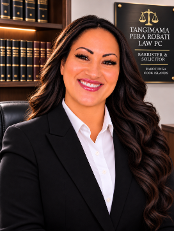 Michelle Tangimama Pera Robati is a Barrister and Solicitor of the High Court of the Cook Islands and Principal and Director of Tangimama Pera Robati Law PC in Rarotonga. Her work spans criminal defence, family and land disputes, civil litigation, wills and probate, contracts and property transactions. Her practice combines courtroom advocacy with a particular interest in customary land rights, succession, family relationships and the protection of community interests.